SKU Poltekpar Makassar

Research & innovation

Research and Innovation

The Culinary Arts Study at Politeknik Pariwisata Makassar is committed to becoming a center for relevant research and innovation in the culinary field. Faculty and students actively contribute through scientific articles, research posters, books, and innovative works with intellectual property rights (IPR). Our research focuses on sustainable culinary practices, technological development, and the exploration of local ingredients. These works impact both the academic world and the global culinary industry.

Explore the following categories for more details:

Utilization of Red Beans at Baraka in Making Dodol
by: Yunike Cheren Ramba

Indonesia is known for its various traditional foods, often made with local ingredients. In Baraka, Enrekang Regency, red beans (campek) are a standout crop, with 26.74 tons harvested from 13 hectares of land. These beans produce dodol, a traditional sweet, helping preserve culinary heritage while boosting the local economy.

This research used descriptive and quantitative methods to gather data through questionnaires and documentation. Making red bean dodol involves weighing, mixing, cooking, and storing ingredients.

The community has received the project well and holds potential for further development as a local specialty with high economic value. It fosters creativity in using local ingredients and promises to improve the livelihoods of red bean farmers in the region.

Pemanfaatan Sawo Manila dalam Pembuatan Kulfi
by: Muh. Fachmi Fauzan Zulhaq

This research explores the potential of sapodilla as an ingredient in kulfi, a traditional Indian ice cream. Sapodilla adds nutritional value and a unique flavor to the dessert. Using qualitative methods, the study tested five experiments, with the final experiment showing that sapodilla-based kulfi is well-received in terms of taste, color, and aroma. The research concludes that sapodilla can be used innovatively in kulfi, offering a new way to enjoy the fruit beyond direct consumption.

Premix Pastry Cream Berbahan Tepung Sagu
By Kadek Chandrika Dewi

This study uses sago flour and egg replacers to create pastry cream, a popular filling for choux and tarts. The process becomes more efficient without compromising quality by using premix flour, which combines dry ingredients that are ready for quick preparation. Several experiments were conducted to test the results, and the pastry cream made with sago flour produced a similar texture and taste to traditional pastry cream. The study shows that this alternative method is effective and offers a new approach to creating pastry cream with simpler ingredients.

Application of Peanut Butter and Honey as Binders in Snack Bar Production
By Rahayu Putri Mentari

This research explores using peanut butter and honey as natural binders in snack bars. These ingredients were selected for their ability to enhance texture and flavor while offering a healthier option. The study tests different peanut butter and honey ratios to determine their impact on the stability and quality of the snack bars, focusing on texture and flavor retention. The findings suggest that peanut butter and honey provide flexibility and product stability, making them promising ingredients for the growing snack bar market.

Pengolahan Snack Bar Tepung Ubi Jalar Putih
From Muh. Assiddiq

This research focuses on producing snack bars using white sweet potato flour as the main ingredient. The study examines the formulation process and evaluates the snack bars’ nutritional value, taste, texture, and overall quality. Three different formulations were tested to find the best combination of sweet potato and wheat flour. The results showed that the 70% white sweet potato flour and 30% wheat flour blend had the best sensory characteristics, balancing softness and flavor. This research highlights the potential of white sweet potato flour as a healthy, gluten-minimized ingredient in snack bar production, supporting sustainable food practices and local economies.

Spice Based Ice Cream (Es Krim Berbasis Rempah)
By Yessi Urfa Devi

This study investigates using ginger and cinnamon as flavoring ingredients in ice cream production. The research was conducted through sensory evaluation and preference tests to compare different ratios of ginger and cinnamon. Three formulations were tested: F1 (75% ginger, 25% cinnamon), F2 (50% ginger, 50% cinnamon), and F3 (25% ginger, 75% cinnamon). The results showed that the F2 formula, with an equal ratio of ginger and cinnamon, was the most preferred by respondents for its balance of flavor and aroma. This spice-based ice cream has a unique taste that appeals to traditional and modern palates.

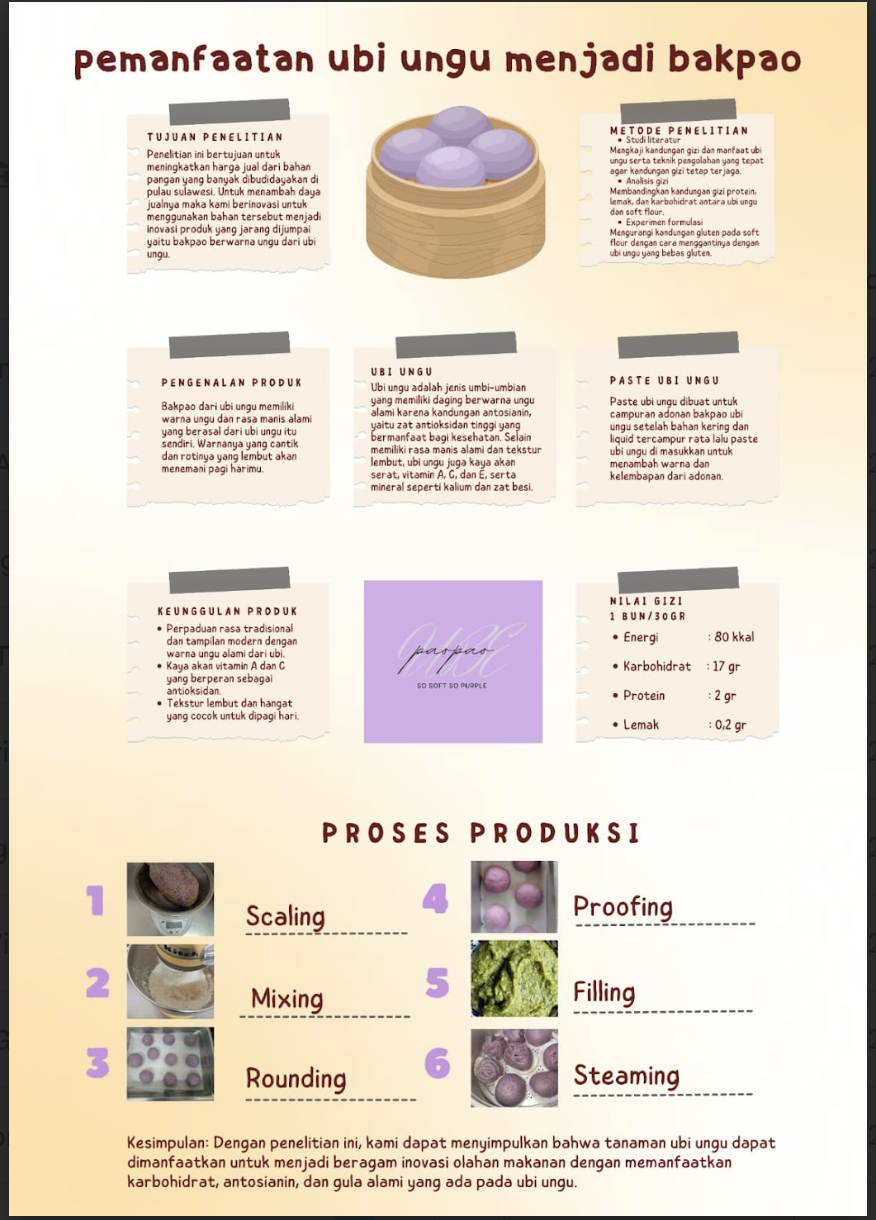
Purple Sweet Potato Bakpao as a Culinary Innovation Promoting Local Food Sustainability by: Indiani Ahmad; Silvya Juinteresia Palolon; Warren Christoper Somalinggi

Purple Sweet Potato Bakpao is an innovative product developed by students of the Culinary Arts Program Semester 4 A  at Politeknik Pariwisata Makassar. Created by Indiani Ahmad (2333029), Silvya Juinteresia Palolon (2333032), and Warren Christoper Somalinggi (2333036), the product showcases the integration of traditional culinary techniques with contemporary nutritional and aesthetic considerations. This project emphasizes the transformation of locally sourced ingredients—specifically purple sweet potatoes—into a nutritious and appealing food product that aligns with modern consumer preferences. Purple sweet potatoes are known for their high antioxidant content, dietary fiber, and essential vitamins, offering numerous health benefits. By incorporating this ingredient into the soft dough of the bakpao, the students successfully created a product with enhanced nutritional value while preserving the signature fluffiness and texture associated with traditional steamed buns. The vibrant purple hue is naturally derived from the sweet potato itself, eliminating the need for artificial coloring agents and ensuring a safer, more wholesome culinary experience for all consumers, including children. The product stands out not only for its nutritional profile but also for its sensory appeal. Its soft texture, subtle sweetness, and visually striking appearance contribute to a unique and enjoyable eating experience. Purple Sweet Potato Bakpao is also highly marketable as a functional snack, a souvenir item, or a featured menu offering in cafés and modern food outlets. The visual appeal and health-conscious formulation respond directly to current food trends that favor natural ingredients, clean labeling, and aesthetic presentation. Through the development of this product, the students demonstrated a comprehensive understanding of culinary technique, ingredient functionality, and food innovation. They also explored essential aspects of product design, branding, and market potential, reinforcing the interdisciplinary learning outcomes promoted by the Culinary Arts Program. This project reflects the program’s commitment to nurturing future culinary professionals who are not only skilled in the kitchen but also capable of creating value-driven food products that support local agriculture and health-conscious consumption.

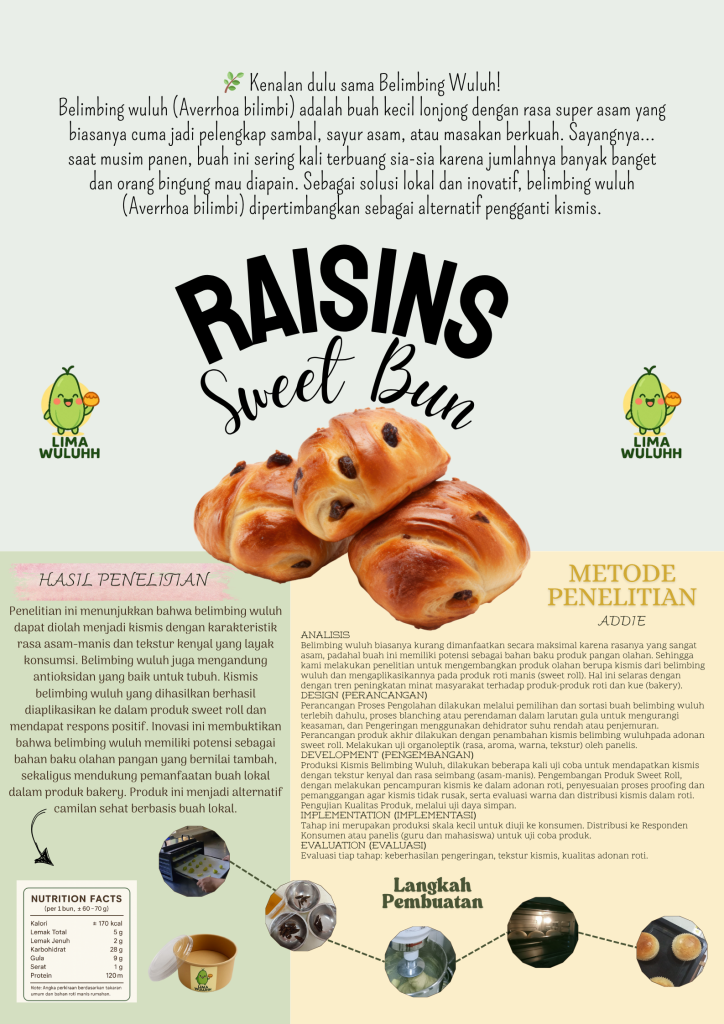
Raisin Sweet Bun with Bilimbi Substitution as a Local Ingredient-Based Bakery Innovation by Salsabilla Tiara Dewi; Radhiska Sahira; Flora Matkaoena

The Raisin Sweet Bun is an innovative bakery product developed by Culinary Arts students at Politeknik Pariwisata Makassar: Salsabilla Tiara Dewi (2333002), Radhiska Sahira (2333003), and Flora Matkaoena (2333019). This product integrates bilimbi (Averrhoa bilimbi)—a highly acidic, seasonal tropical fruit often underutilized—into a modern sweet bun by transforming it into a local substitute for conventional raisins. This approach not only addresses issues of food waste during harvest seasons but also promotes the use of functional local ingredients in contemporary pastry production. Bilimbi is traditionally used as a souring agent in Indonesian dishes such as sambal or sour soup, but its extreme acidity often limits its application. Through a controlled drying process, the bilimbi was converted into a chewy, sweet-and-sour ingredient resembling raisins in both taste and texture. The result, referred to as “bilimbi raisins,” offers not only a sustainable alternative but also a source of natural antioxidants, enhancing the nutritional value of the final product. The Raisin Sweet Bun incorporates these bilimbi raisins into soft, enriched bread rolls. Sensory evaluation revealed that the product was well-received in terms of flavor, texture, and overall appearance. With a balance of sweetness and mild acidity, the bun provides a refreshing variation from conventional sweet rolls, aligning with current trends that emphasize healthier and more sustainable eating options. The product development followed the ADDIE model (Analysis, Design, Development, Implementation, Evaluation). The process began with identifying the potential of bilimbi as an alternative ingredient, followed by drying trials using low-heat dehydration to retain flavor and nutritional properties. In the design phase, the team formulated dough recipes and incorporated the bilimbi raisins. Consumer testing and sensory analysis were conducted to measure acceptance levels. Finally, evaluations were made based on texture, visual appeal, and product stability. This project illustrates how local fruits like bilimbi can be transformed into value-added food products through innovation, scientific process, and culinary creativity. The Raisin Sweet Bun serves as a practical example of how future culinary professionals can develop sustainable bakery items rooted in local identity, offering meaningful contributions to the advancement of Indonesia’s food industry.

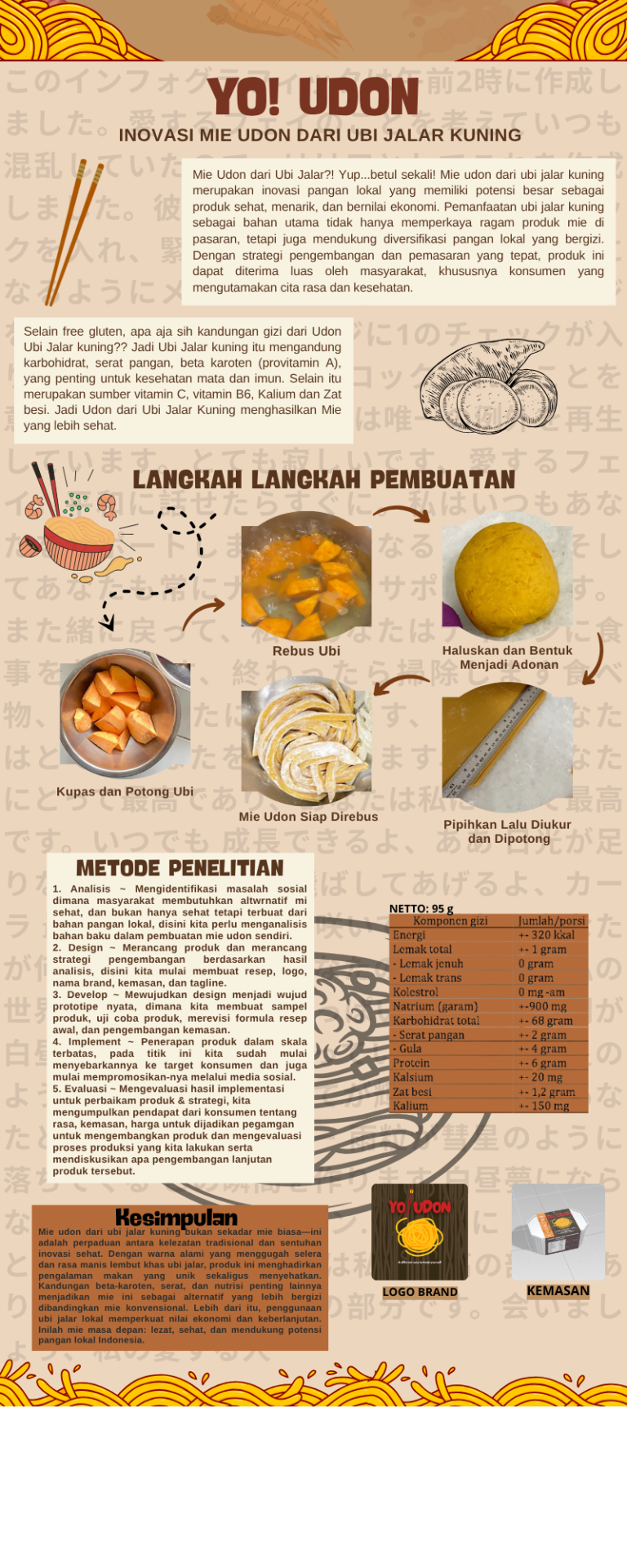
YO! UDON An Innovative Healthy Noodle Made from Yellow Sweet Potatoes by: Nabila Galih Nikentari; Vicaria Karunia Elisabet B; and Fina Abriani Ipang

YO! UDON is a culinary innovation that transforms local yellow sweet potatoes into a healthy, gluten-free udon noodle alternative. This product was developed by Semester 4A students of the Culinary Arts Program at Politeknik Pariwisata Makassar—Nabila Galih Nikentari, Vicaria Karunia Elisabet B., and Fina Abriani Ipang—in response to the growing demand for nutritious, functional, and locally sourced food products. The initiative is grounded in the idea that local food commodities can be optimized not only for their taste but also for their health benefits and economic potential. Yellow sweet potatoes are rich in beta-carotene (provitamin A), dietary fiber, vitamin C, vitamin B6, potassium, and iron, making them an excellent base ingredient for creating noodles that are both flavorful and beneficial for health. The production process is straightforward yet meaningful. It involves peeling and boiling the sweet potatoes, mashing them into dough, flattening the dough, and cutting it into udon-shaped strands before boiling. This innovation was realized through a structured development method consisting of five stages: problem identification, product design, prototype development, small-scale implementation, and evaluation based on consumer feedback. From its nutritious formulation to its visually appealing brand identity and eco-conscious packaging, YO! UDON demonstrates how traditional food ingredients can be reimagined into modern culinary products. It embodies the integration of food innovation, local wisdom, and sustainability. YO! UDON is more than just a noodle—it is a future-forward food product that promotes health, supports local agriculture, and reflects the creative potential of young culinary professionals in Indonesia.

No downloads found!

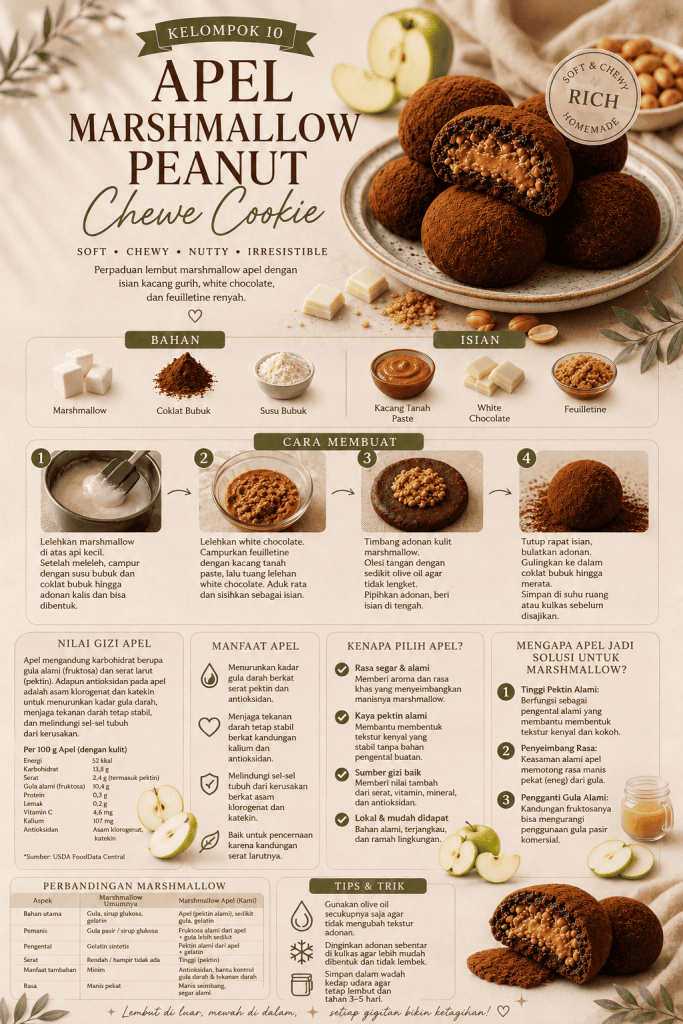
    Apple Marshmallow Peanut Chewy Cookies

    This poster presents Apple Marshmallow Peanut Chewy Cookies, an innovative snack that combines soft apple marshmallow with a rich chocolate coating. The cookies have a chewy texture on the outside and a creamy filling on the inside, making them attractive for people who enjoy sweet and unique desserts.

    The filling is made from peanut paste, white chocolate, and crispy feuilletine. These ingredients create a balanced combination of sweet, nutty, creamy, and crunchy flavors. The use of apples also gives the cookies a fresh taste while providing natural pectin, which helps form a soft and chewy marshmallow texture.

    The poster also explains the ingredients, preparation steps, nutritional value, and benefits of apples. It compares apple marshmallow with regular marshmallow and shows that apple-based marshmallow contains natural fiber, antioxidants, vitamins, and minerals. Several preparation and storage tips are also included to help keep the cookies soft, fresh, and delicious for a longer time.

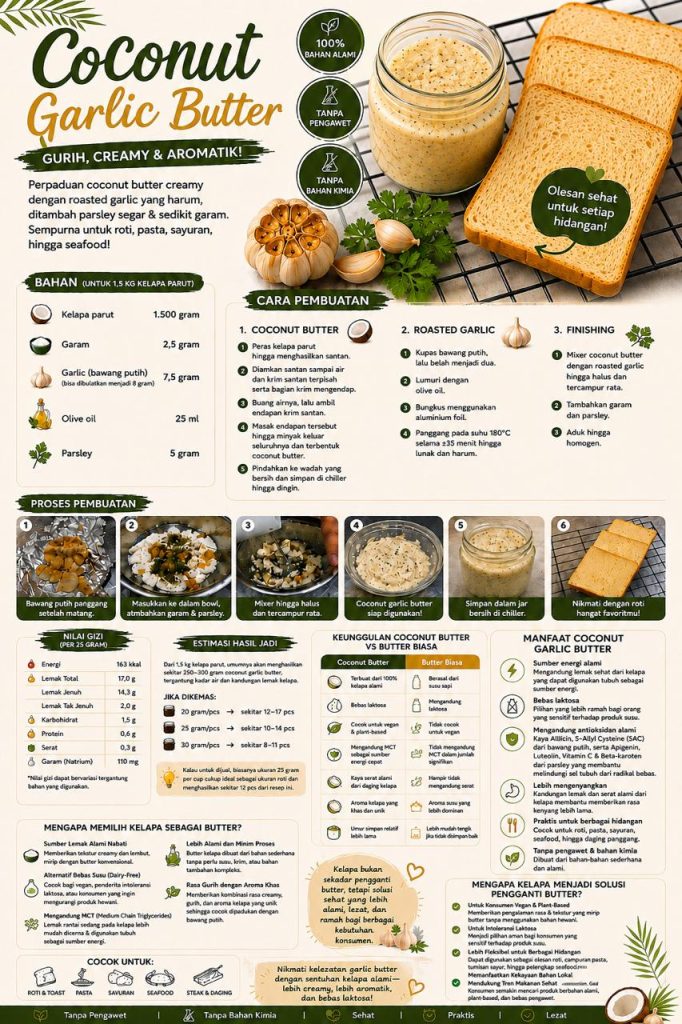
    Coconut Garlic Butter

    This poster introduces Coconut Garlic Butter, a creamy and aromatic spread made from natural coconut butter, roasted garlic, parsley, olive oil, and a small amount of salt. The product is presented as free from preservatives and chemical additives, making it a practical option for various meals.

    The poster explains the ingredients and preparation process, starting from extracting coconut cream, making coconut butter, roasting the garlic, and mixing all ingredients until smooth. It also shows how the product can be stored in a clean jar and enjoyed with toast, pasta, vegetables, seafood, steak, and other dishes.

    Coconut Garlic Butter is described as lactose-free, rich in healthy fats, and suitable for plant-based diets. The poster also highlights its nutritional value, serving estimates, and advantages compared with regular butter, especially its natural ingredients, coconut aroma, and versatile use.

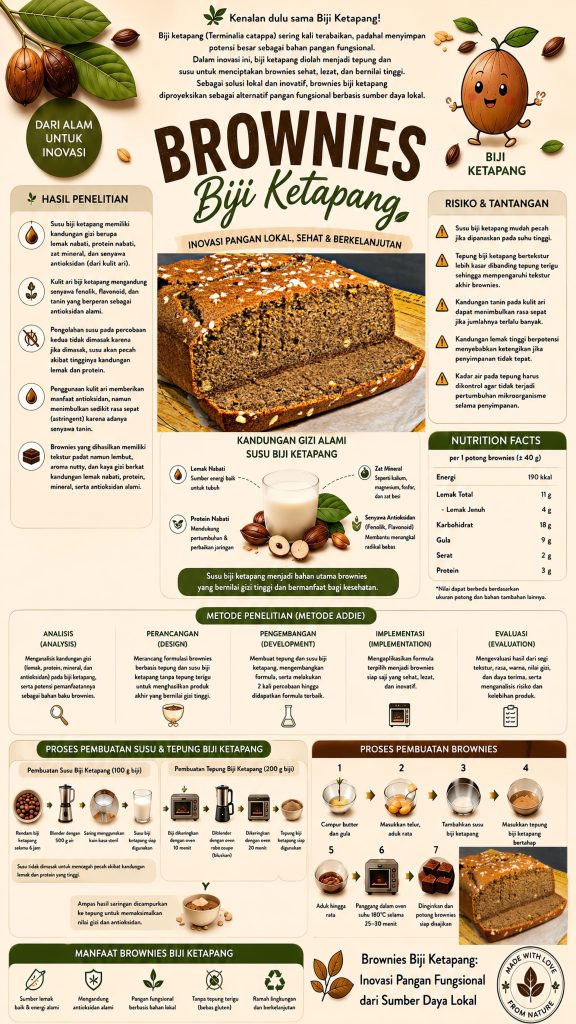
    Brownies Biji Ketapang

    The poster presents brownies made from tropical almond seeds, or Terminalia catappa. These seeds contain plant-based fats, protein, minerals, and antioxidants, making them suitable for functional food products. They are processed into milk and flour as the main ingredients of the brownies.

    The research uses the ADDIE method, covering analysis, design, development, implementation, and evaluation. The production process includes soaking, blending, filtering, drying, and grinding the seeds before mixing them with eggs, sugar, and butter. The brownies are then baked at 180°C for about 25 to 30 minutes.

    Tropical almond seed brownies offer several benefits, such as providing natural energy, antioxidants, and a wheat-free alternative. They also support the use of local and sustainable food resources. Proper processing and storage are still needed to prevent separation, rough texture, astringent taste, and microbial growth.

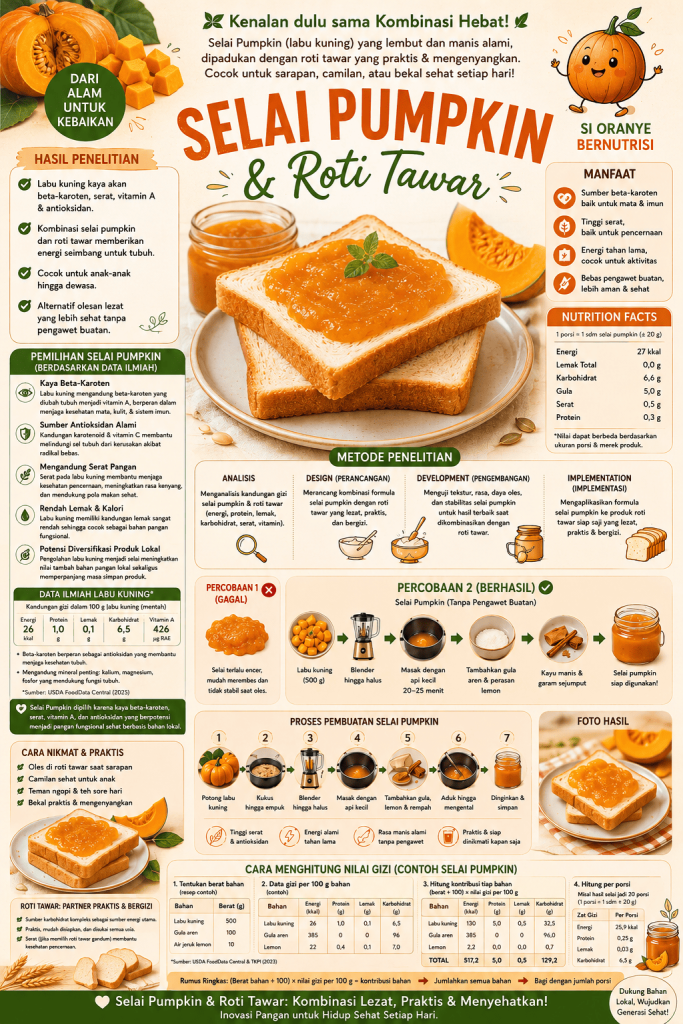
    Selai Pumpkin dan Roti Tawar

    The poster presents pumpkin jam with white bread as a practical, nutritious, and naturally sweet food combination. Pumpkin is rich in beta-carotene, dietary fiber, vitamin A, and antioxidants, while white bread provides carbohydrates as a source of energy. This product is suitable for breakfast, snacks, or lunch boxes and can be consumed by both children and adults. The jam is also made without artificial preservatives, making it a healthier alternative to many commercial spreads.

    The research process includes analysis, design, development, and implementation. The researchers first examined the nutritional value of pumpkin and white bread, then designed a suitable jam formula. The first trial was unsuccessful because the jam was too watery, easily separated, and did not spread well. In the second trial, the formula was improved by cooking blended pumpkin over low heat, adding sugar, lemon juice, cinnamon, and a small amount of salt. This process produced a thicker, more stable, and better-tasting pumpkin jam.

    Pumpkin jam offers several benefits, including supporting eye health and immunity, improving digestion, and providing longer-lasting energy. It is also low in fat, contains natural antioxidants, and supports the use of local food ingredients. The jam can be served on bread, used as a cake filling, or enjoyed as a daily snack. Proper cooking, cooling, and storage are important to maintain its texture, flavor, safety, and overall quality.

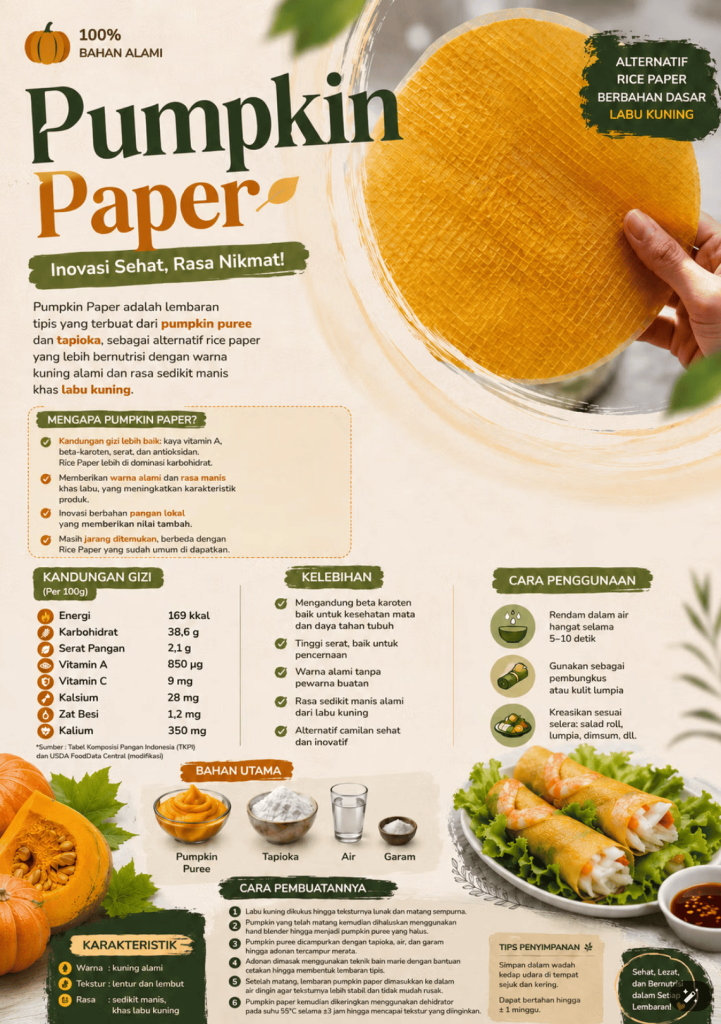
    Pumpkin Paper

    The poster introduces Pumpkin Paper, a thin edible sheet made from pumpkin puree and tapioca as an alternative to conventional rice paper. This product has a natural yellow color and a slightly sweet pumpkin flavor. It is designed as a healthier and more innovative food wrapper while also increasing the value of locally available pumpkin.

    Pumpkin Paper contains useful nutrients such as vitamin A, beta-carotene, dietary fiber, vitamin C, calcium, iron, and potassium. Its main advantages include supporting eye health, helping digestion, providing natural color without artificial additives, and offering a flexible texture. The product can be used to wrap spring rolls, salad rolls, dumplings, and other foods after being soaked in warm water for about five to ten seconds.

    The production process begins by steaming pumpkin until soft, blending it into a smooth puree, and mixing it with tapioca, water, and salt. The mixture is spread into a thin layer, steamed, and then dried at approximately 55°C until it reaches the desired texture. For storage, Pumpkin Paper should be kept in an airtight container in a cool and dry place, where it can last for up to one week.

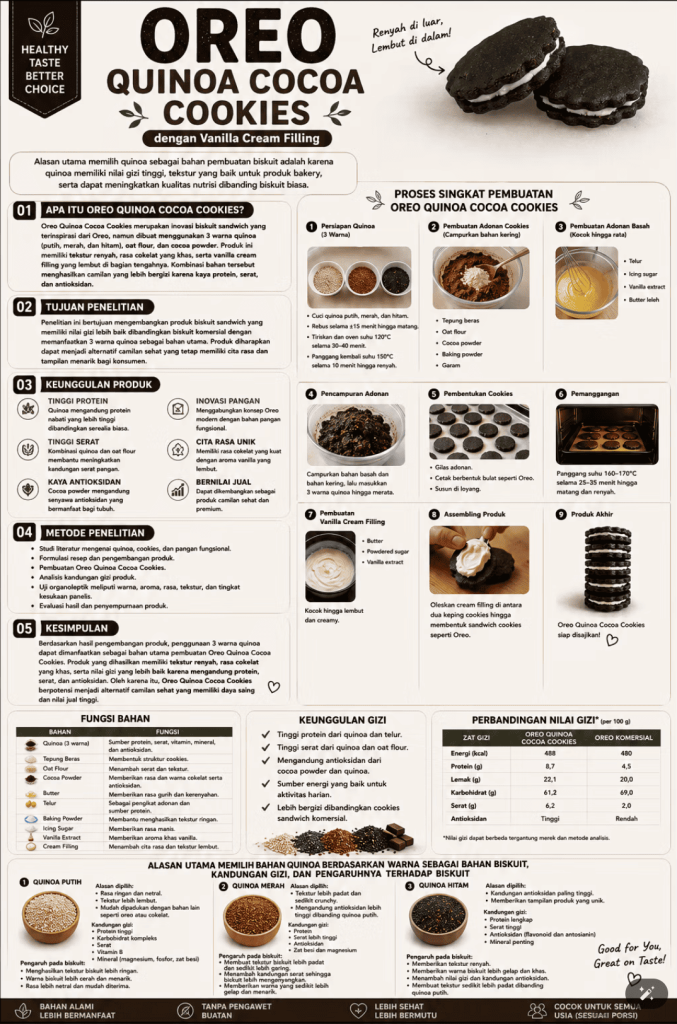
    Oreo Quinoa Cocoa Cookies

    The poster presents Oreo Quinoa Cocoa Cookies, a healthier sandwich-cookie innovation made with three types of quinoa, oat flour, cocoa powder, and vanilla cream filling. Quinoa is selected because it contains protein, fiber, minerals, and antioxidants, while also providing a pleasant texture. The product is designed to offer the familiar appearance and taste of Oreo-style cookies with improved nutritional value.

    The research aims to develop a nutritious snack by combining white, red, and black quinoa in one cookie formula. The production process includes washing, soaking, drying, and roasting the quinoa before mixing it with dry and wet ingredients. The dough is shaped into round cookies, baked at approximately 160–170°C for 25–35 minutes, and filled with soft vanilla cream. Product testing is conducted to evaluate its color, aroma, taste, texture, and consumer acceptance.

    These cookies offer several advantages, including higher protein and fiber content, strong antioxidant properties, and a distinctive chocolate flavor. According to the poster, they contain more protein and fiber than regular commercial Oreo cookies. The use of natural ingredients and the absence of artificial preservatives make the product a promising functional snack that is suitable for different age groups and has good potential for further development.

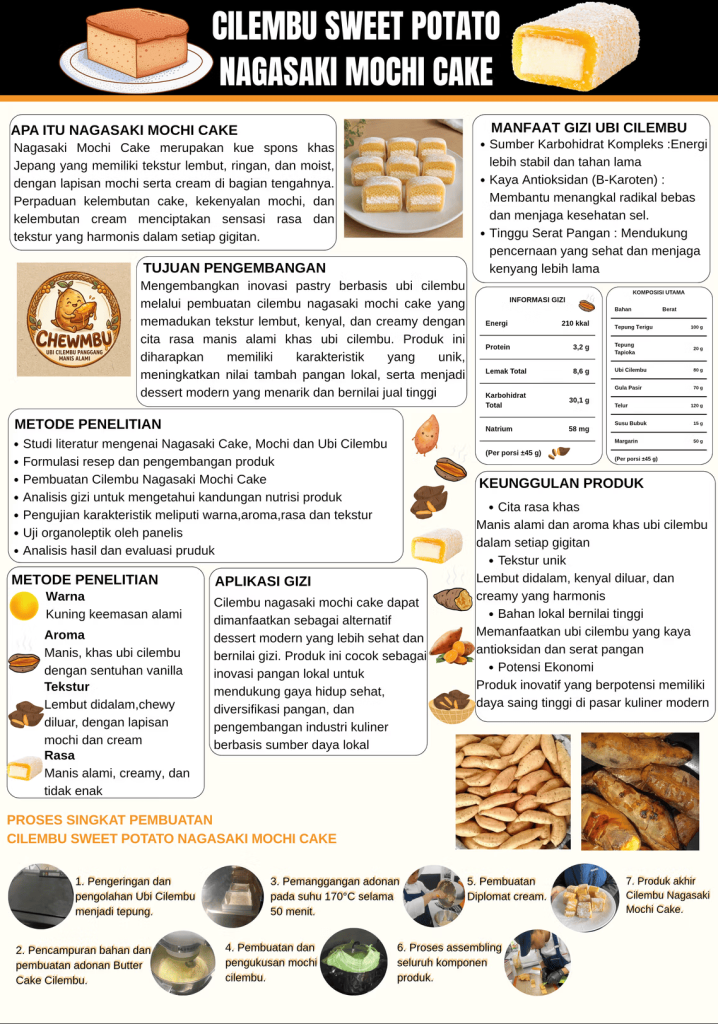
    Cilembu Sweet Potato

    Nagasaki Mochi Cake

    The poster presents Cilembu Sweet Potato Nagasaki Mochi Cake, a modern dessert inspired by Japanese sponge cake and enhanced with local Cilembu sweet potato. The product combines a soft and moist cake layer, chewy mochi, and smooth cream filling. Cilembu sweet potato gives the cake a naturally sweet flavor, golden-yellow color, and distinctive aroma, creating a unique dessert with an attractive texture and appearance.

    The product was developed through literature study, recipe formulation, production trials, nutritional analysis, sensory testing, and product evaluation. Its preparation begins with drying and processing Cilembu sweet potato into flour. The flour is then mixed with other ingredients to make the cake batter, which is baked at approximately 170°C for 50 minutes. Mochi and cream are prepared separately before all components are assembled into the final cake.

    Cilembu sweet potato provides complex carbohydrates, dietary fiber, and beta-carotene antioxidants that support energy, digestion, and protection against free radicals. One serving of approximately 45 grams contains around 210 calories, 3.2 grams of protein, 8.6 grams of fat, and 30.1 grams of carbohydrates. This product also increases the value of local food resources and has strong potential as a nutritious, innovative, and commercially attractive dessert.

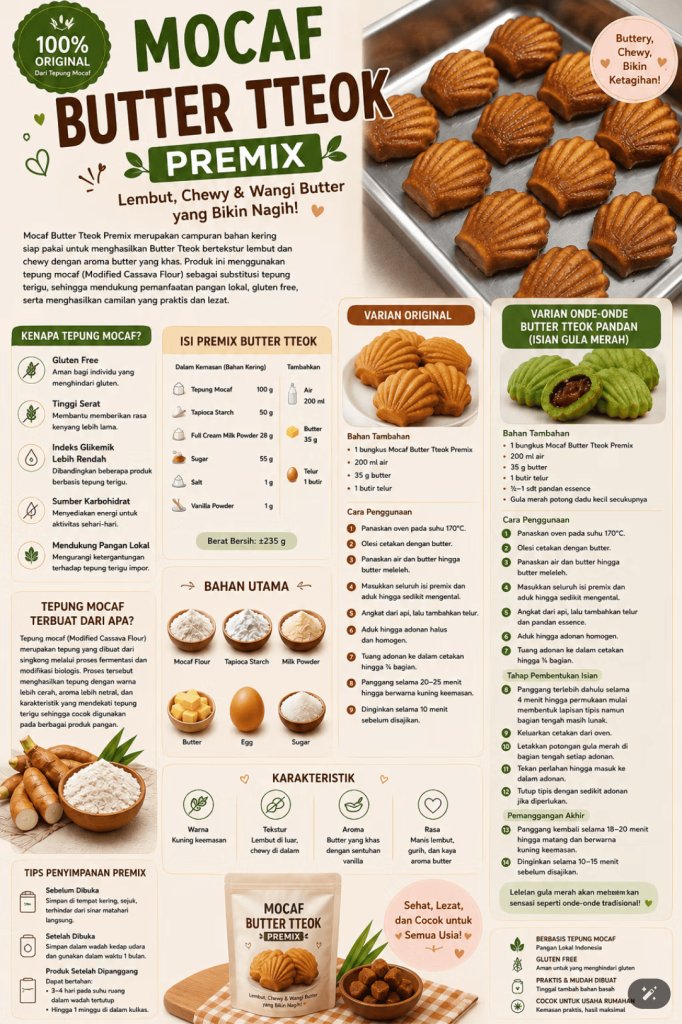
    Mocaf Butter Tteok Premix

    The poster introduces Mocaf Butter Tteok Premix, a ready-to-use dry mixture made primarily from mocaf flour, tapioca starch, milk powder, sugar, salt, and vanilla powder. Mocaf, or Modified Cassava Flour, is used as a substitute for wheat flour, making the product gluten-free and supporting the use of local cassava-based ingredients. The premix is designed to produce butter tteok with a soft exterior, chewy center, and rich buttery aroma.

    The product is available in two variations, namely the original flavor and pandan butter tteok filled with palm sugar. To prepare the original version, users only need to add water, butter, and an egg before baking the mixture at approximately 170°C. The pandan variation follows a similar process but includes pandan essence and palm sugar filling, creating a flavor inspired by traditional onde-onde. This makes the premix practical for home cooking and small food businesses.

    Mocaf Butter Tteok offers several advantages, including being gluten-free, high in fiber, and made from local food resources. It also has a lower glycemic index than many wheat-based products and provides carbohydrates for daily energy. The premix should be stored in a dry, cool place before opening and in an airtight container after opening. Once baked, the product can be stored for several days or kept in the refrigerator for a longer shelf life.

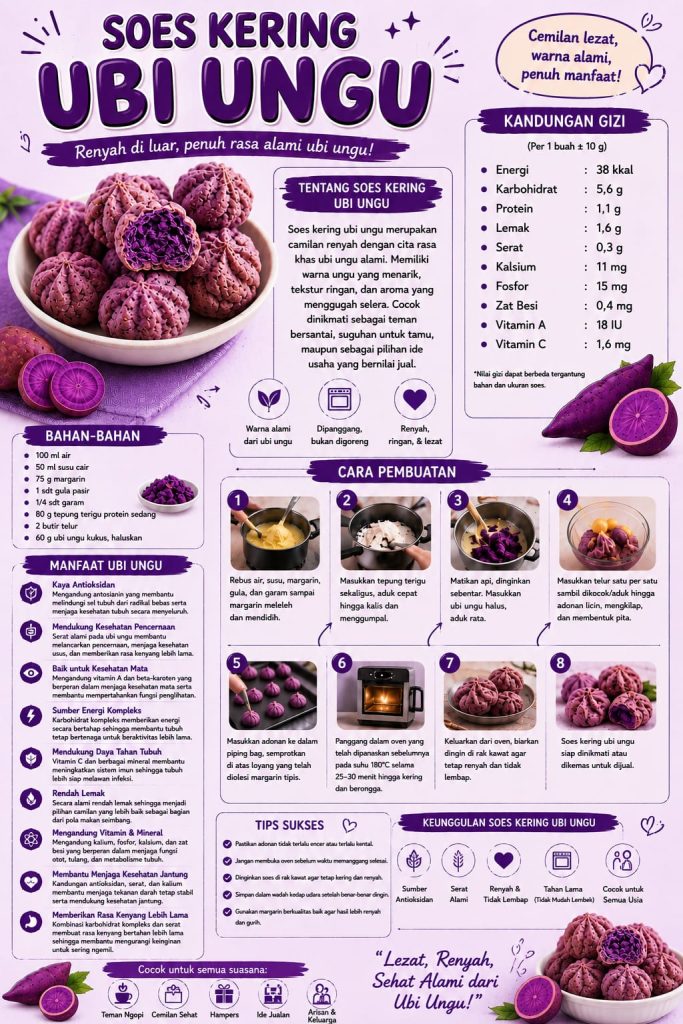
    Soes Kering Ubi Ungu

    The poster introduces Purple Sweet Potato Dry Cream Puffs, a crispy baked snack made with mashed purple sweet potato. The product has a natural purple color, a light texture, and a distinctive sweet potato flavor. It can be enjoyed with tea or coffee, served to guests, used as a gift, or developed as a small business product with good selling potential.

    The preparation begins by boiling water, milk, margarine, sugar, and salt. Flour is then added and stirred until the dough becomes smooth and firm. After cooling slightly, mashed purple sweet potato and eggs are mixed into the dough. The mixture is piped onto a baking tray and baked at approximately 180°C for 25–30 minutes until dry, crisp, and hollow inside.

    Purple sweet potato provides antioxidants, fiber, complex carbohydrates, vitamins, and minerals. These nutrients may support digestion, eye health, immunity, energy production, and overall body health. The finished cream puffs are low in moisture, naturally colored, crisp, and suitable for different age groups. Proper baking and storage in an airtight container are important to maintain their crunchy texture and prevent them from becoming soft.

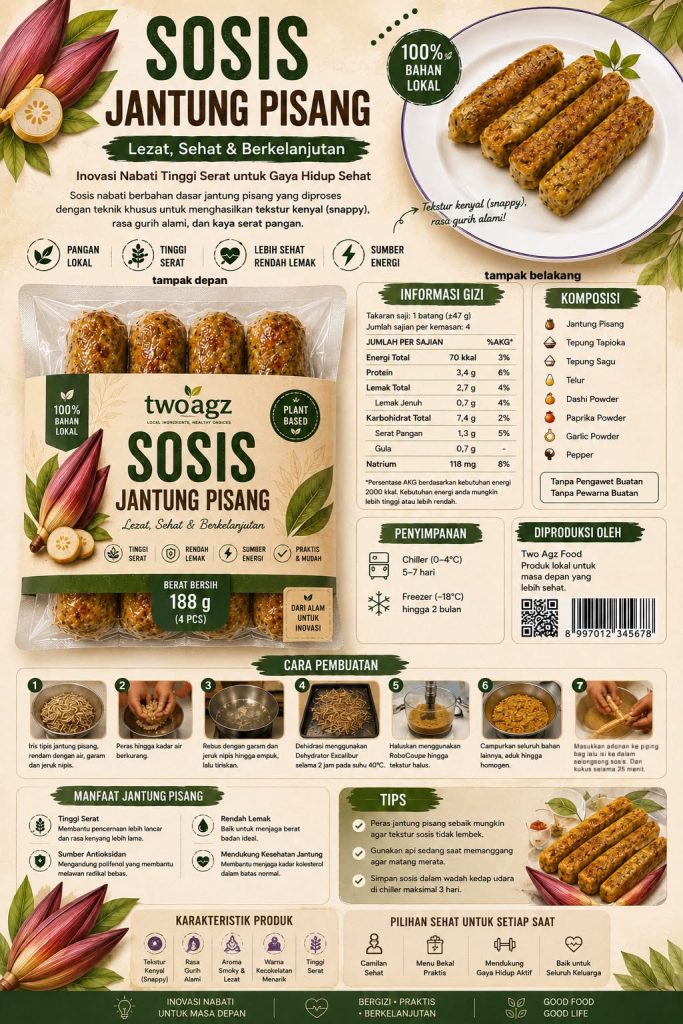
    Sosis Jantung Pisang

    The poster introduces Banana Blossom Sausage, a plant-based food innovation made from locally sourced banana blossom. It is designed as a healthier and more sustainable alternative to conventional sausage, with a chewy texture, savory flavor, and high dietary fiber content. The main ingredients include banana blossom, tapioca flour, sago flour, eggs, and several seasonings such as garlic, paprika, pepper, and dashi powder.

    The production process begins by slicing and soaking the banana blossom, then squeezing it to reduce excess water. It is boiled with salt, dehydrated at around 40°C, blended, and mixed with the other ingredients until evenly combined. The mixture is placed into sausage casings and steamed for approximately 25 minutes. According to the poster, one serving contains about 70 calories, 3.4 grams of protein, 2.7 grams of fat, 7.4 grams of carbohydrates, and 1.3 grams of dietary fiber.

    Banana blossom sausage offers several benefits, including supporting digestion, providing antioxidants, and serving as a lower-fat food option. It can be consumed as a healthy snack, a practical lunch-box menu, or a source of energy for daily activities. For proper storage, the product can be kept in a chiller for five to seven days or frozen for up to two months.

    Scroll to Top